Your EV said 260 miles last month. Now it says 205, and you haven't changed a thing.
Except a Missouri cold snap moved in.
If you've noticed your electric vehicle's estimated range dropping as temperatures fall, there's a reason. Cold weather changes how your battery performs and how much energy your vehicle needs to keep you comfortable.
For EV owners in Ellisville, Ballwin, Wildwood, Manchester, and Chesterfield, that can mean fewer miles between charges once winter arrives.
But a lower range estimate doesn't automatically mean something is wrong with your EV.
A few changes to your driving routine, along with the right tire maintenance, can help you make better use of every charge.
Why Does Cold Weather Reduce EV Range?
Electric vehicles use lithium-ion batteries to store the energy that powers their motors.
When temperatures drop, the chemical processes inside those batteries slow down. That can make it harder for the battery to deliver energy efficiently.
At the same time, your EV needs power to warm the cabin.
Unlike a gas-powered vehicle that can use waste heat from its engine, an EV generally draws energy from its battery pack to heat the interior.
That creates two demands on your available range:
- Cold battery performance: Lower temperatures affect how efficiently the battery operates.
- Cabin heating: Keeping the interior warm uses energy that could otherwise power the vehicle.
Some EVs have heat pumps that reduce the amount of energy needed for cabin heating, but they can still experience winter range loss.
That's why your dashboard estimate can change even when you're driving the same routes you did in October.
How Much Range Can You Lose During a Missouri Winter?
Missouri winters aren't as consistently severe as winters farther north, but West County still gets freezing temperatures, icy mornings, and occasional stretches of serious cold.
Those conditions can affect EV range.
The exact amount depends on your vehicle, battery technology, outside temperature, cabin heating, and driving habits.
As a general planning estimate, an EV might lose around 10% to 25% of its usual range in cold conditions, with larger reductions possible during more severe
cold or repeated short trips.
Here's what that could look like for an EV that normally delivers 260 miles per charge:
Range Reduction
Estimated Available Range
- 10% 234 miles
- 15% 221 miles
- 20% 208 miles
- 25%. 195 miles
These are illustrative figures, not guaranteed results for every EV.
Your actual range may be higher or lower depending on the model and conditions.
So if your vehicle's estimate drops from 260 miles to around 205 after a cold snap, that change can be consistent with normal winter performance.
For drivers researching EV winter range in St. Louis, the important thing is knowing what to expect from your particular vehicle when temperatures fall.
Why Short Winter Trips Use So Much Energy
Have you noticed your EV seems especially inefficient during the first few minutes of a cold drive?
That's because the vehicle may be warming both the battery and cabin.
When your EV has been sitting outside overnight, getting everything up to a comfortable operating temperature takes energy.
And on a short trip, that initial energy use can make up a significant portion of the drive.
Think about a typical day around West County.
You drive a few minutes to the grocery store, park, then head somewhere else later.
Each time the vehicle cools down, it may need additional energy to warm back up.
Those short trips can make your winter efficiency look worse than it does on a longer drive.
Preconditioning Can Help Preserve Your Range
One of the most useful winter EV habits is preconditioning.
Preconditioning means warming your vehicle before you begin driving.
Many EVs allow you to schedule cabin heating through the vehicle's settings or a mobile app. Some also support battery preconditioning.
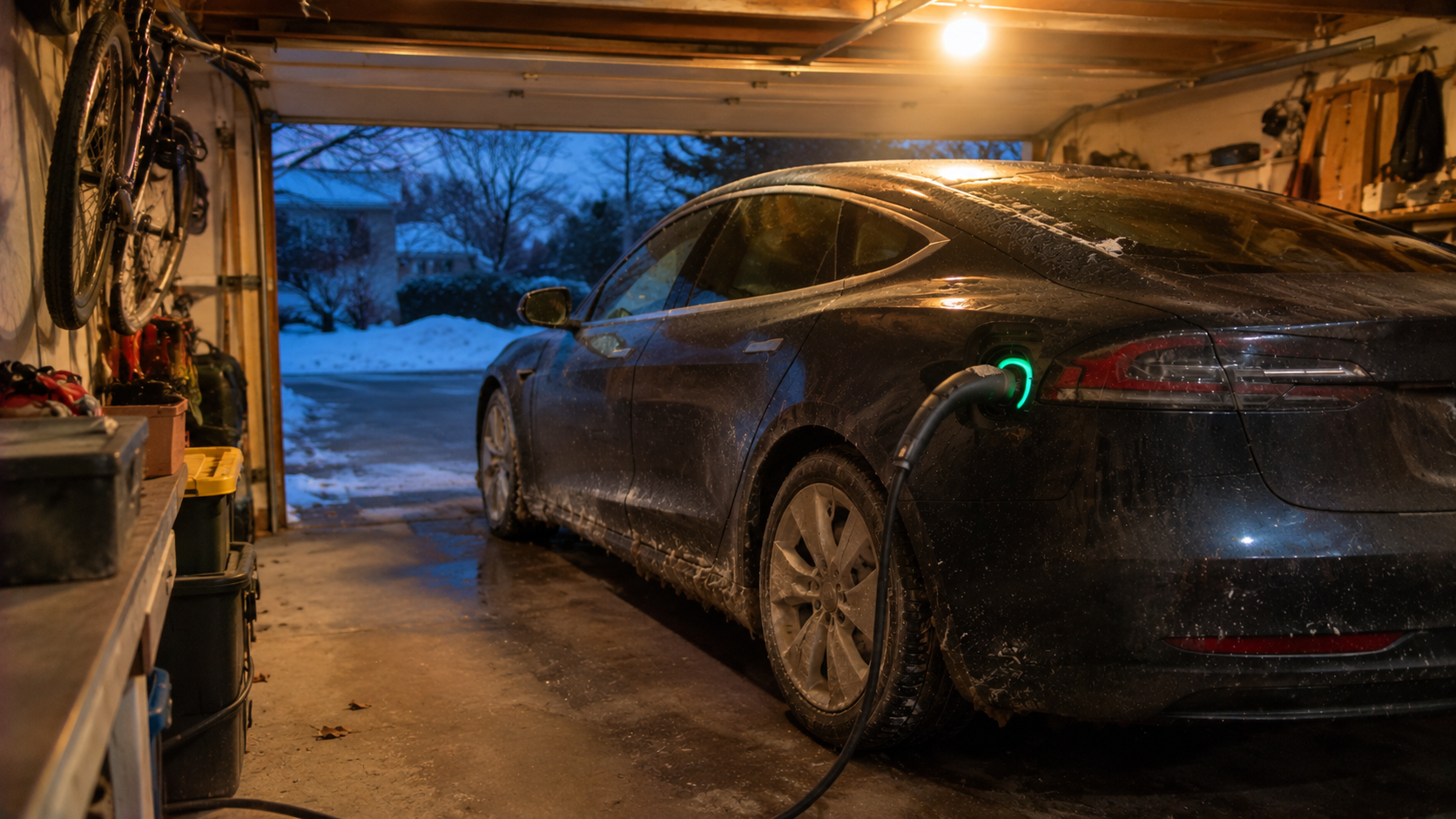
The best time to do it is while your EV is still plugged in.
That allows the vehicle to draw electricity from the grid to help warm the cabin and, when supported, the battery.
Instead of using as much stored battery energy during the first part of your drive, you're starting with a vehicle that's already warmer.
For example, if you leave for work at 7:30 every morning, schedule your EV to warm up shortly before departure.
You'll step into a comfortable cabin, and your vehicle may use less battery energy getting everything warm.
Preconditioning won't eliminate winter range loss, but it can help reduce some of the energy demand at the beginning of your drive.
Cold Weather Can Lower Your Tire Pressure
Your battery isn't the only thing affected by cold temperatures.
Your tires are too.
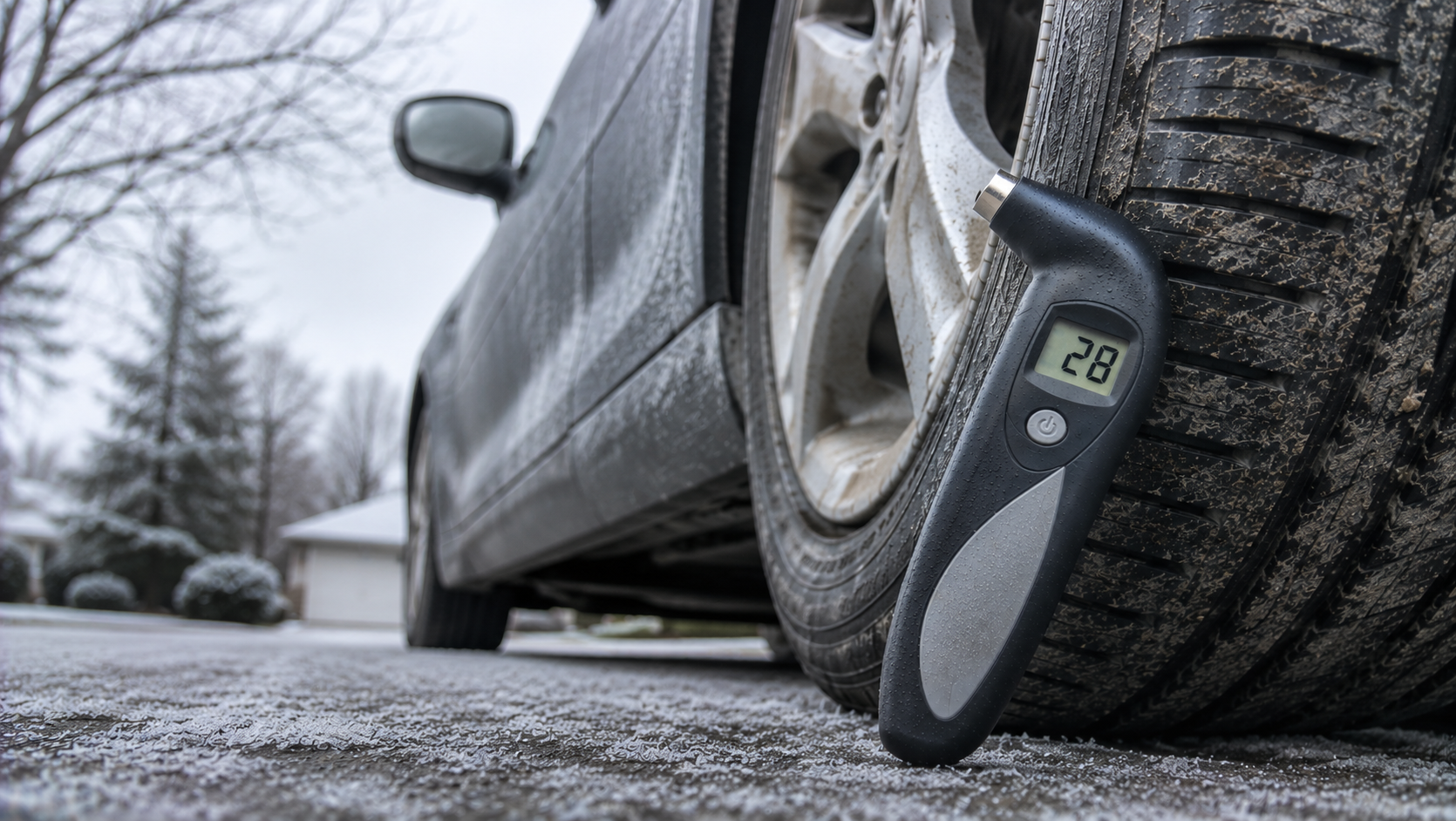
As temperatures fall, tire pressure decreases.
A common rule of thumb is that tire pressure changes by approximately 1 PSI for every 10°F change in temperature, although the exact amount varies.
That means tires properly inflated during a warm October afternoon may be underinflated after a November cold snap.
And underinflated tires can increase rolling resistance.
Your EV then needs more energy to move down the road, which can reduce efficiency and available range.
For drivers concerned about EV tire pressure in West County, checking inflation is one of the easiest ways to address an avoidable source of energy loss.
At Ellisville Tire & Service, we check EV tire pressures throughout winter. Low pressure can quietly cost range, and correcting it is a free, straightforward fix.
Why Tire Pressure Matters So Much on an EV
Correct tire pressure matters on every vehicle.
But EV owners often notice efficiency changes more because they directly affect how far the vehicle can travel between charges.
When tires are underinflated, they can create more rolling resistance.
That means the vehicle may use additional energy to travel the same distance.
Low pressure can also contribute to uneven tire wear and affect handling.
So a simple pressure check can help protect several things at once:
- Driving efficiency
- Available range
- Tire tread life
- Handling and road contact
- Overall tire performance
The goal isn't to inflate your tires beyond the recommended pressure to squeeze out a few more miles.
Use the cold tire pressure listed by your vehicle manufacturer, usually found on the driver's door-jamb sticker.
If you're unsure, stop by Ellisville Tire & Service for a free tire pressure check.
Winter Tires vs. All-Season Tires: What Makes Sense in Missouri?
West County winters can be unpredictable.
You might have several weeks of relatively mild weather followed by freezing rain, snow, or icy roads.
That makes tire selection an important decision for EV owners.
All-season tires are designed to handle a variety of road conditions, but their performance can be limited in more severe winter weather.
Dedicated winter tires use tread patterns and rubber compounds designed to improve traction in cold temperatures, snow, and ice.
That added traction can be valuable during icy Missouri mornings.
But there's a potential trade-off.
Some winter tires have greater rolling resistance than efficiency-focused all-season tires, which can reduce EV range.
So which is the better choice?
It depends on where and how you drive.
If your EV mostly travels on cleared suburban roads, a suitable all-season tire may meet your needs.
If you regularly drive in snow, freezing conditions, or on roads that aren't cleared quickly, winter tires may be worth considering.
At Ellisville Tire & Service, we'll help you compare traction, efficiency, and tire compatibility without pushing you toward something you don't need.
EV Tires Have Different Demands
Electric vehicles can place different demands on their tires than comparable gas-powered vehicles.
Many EVs are heavier because of their battery packs, and electric motors can deliver strong torque immediately during acceleration.
Those characteristics can influence tire wear and tire selection.
When replacing tires on an EV, it's important to consider the correct size, load rating, speed rating, and manufacturer recommendations.
You may also want to think about rolling resistance, ride comfort, traction, and tread life.
A tire that works well on one vehicle isn't automatically the best choice for another.
If you're unsure which tires make sense for your EV, an EV tire consultation can help you narrow down the options.
Missouri Cold Snaps Make Range Planning Important
Cold-weather range loss isn't always a gradual change.
Missouri temperatures can shift quickly, and a sudden freeze may affect your EV's estimated range overnight.
If you're planning a longer trip, don't assume you'll get the same mileage you saw during warmer weather.
Give yourself extra range, especially if freezing temperatures or winter weather are expected.
Check charging options before you leave and allow for the possibility that charging may take longer when the battery is very cold.
Some EVs can warm their batteries before a fast-charging stop. If your vehicle supports this feature, use its built-in navigation or charging settings to prepare.
And if you're making several short trips around West County, remember that repeatedly warming the cabin can add to your overall energy use.
A little planning helps keep those winter range changes manageable.
Simple Ways to Protect Your EV's Winter Range
You don't need to change everything about how you drive when the temperature drops.
Start with a few practical habits.
Precondition while plugged in. Warm the cabin and, when supported, the battery before leaving home.
Check tire pressure regularly. Cold temperatures can lower inflation and increase rolling resistance.
Use Eco mode when appropriate. Many EVs offer settings that help reduce energy use through adjustments to acceleration and climate control.
Use heated seats when available. Seat and steering-wheel heaters may help keep you comfortable without relying as heavily on cabin heating.
Plan charging with extra range. Give yourself more margin during cold weather, especially on longer drives.
Combine short trips when practical. Repeatedly warming a cold vehicle can use more energy than one longer outing.
Choose tires for your actual driving conditions. Traction and vehicle compatibility matter alongside efficiency.
These habits won't make winter range identical to summer range, but they can help you get more out of the energy available.
When Should You Get Your EV Tires Checked?
A lower range estimate doesn't automatically mean you need new tires.
But it's worth checking whether tire pressure or tire condition is contributing to the change.
Consider stopping by if:
- Your tire pressure warning light comes on.
- You haven't checked inflation since temperatures dropped.
- Your tires show uneven wear.
- You're unsure whether your current tires are suited to winter conditions.
- You're considering winter tires for the first time.
- You want to rule out tire-related efficiency problems.
A tire and pressure check won't change the effects of cold battery chemistry or cabin heating.
But it can help identify issues that are making winter efficiency worse than it needs to be.
Local EV Tire Advice Without the Sales Pitch
You don't need a dealership appointment just to ask whether your EV's tire pressure is correct.
At Ellisville Tire & Service, our Master Certified technicians understand how tire condition and inflation affect vehicle performance, including the efficiency concerns that matter to EV drivers.
We'll check your tires, explain what we find, and help you decide whether anything needs attention.
If your tires are in good shape, we'll say so.
If a different tire could better suit your winter driving needs, we'll walk you through the options.
No unnecessary upsells. No corporate sales pitch.
Just straightforward advice from a local West County shop.
Get Your EV Ready for a Missouri Winter
Cold weather can reduce your EV's range, but it doesn't have to catch you off guard.
Preconditioning, smart charging habits, and proper tire pressure can all help you manage the change.
And while you can't control the next Missouri cold snap, you can make sure your tires are ready for it.
Ellisville Tire & Service is a single local shop in Ellisville, Missouri, serving drivers from Ballwin, Wildwood, Manchester, Chesterfield, and across West County, with Monday through Saturday hours.
Stop by for a free tire pressure check or ask our team about an EV tire consultation.
We'll help you understand your options, check your tire condition, and give you an honest answer about what your EV needs for the colder miles ahead.