What actually happens during a professional Ellisville brake inspection.
Before storm season rolls through West County or you load up for a long road trip, it’s worth knowing exactly what kind of shape your brakes are in.
If you live in Ellisville, Ballwin, Wildwood, Manchester, or Chesterfield, your vehicle sees everything from humid Missouri summers to cold snaps and heavy spring rain. Whether you’re commuting on I-64 or navigating Manchester Road traffic, your braking system works hard.
So what actually happens during a professional Ellisville brake inspection, and how is it different from a quick “free check” at a chain store?
Here’s what you can expect at Ellisville Tire & Service.
Step 1: It Starts with a Real Conversation
Before we lift your vehicle, we ask questions.
Have you noticed noise?
Any vibration when braking?
Has it just been a while?
These matter. A brake inspection isn’t just about parts, it’s about symptoms and driving habits. A Chesterfield commuter logging highway miles will have different wear patterns than a Ballwin family running daily errands and school pickups.
We listen first. Then we inspect.
Step 2: Lifting the Vehicle and Removing the Wheels
A true West County brake check means full access.
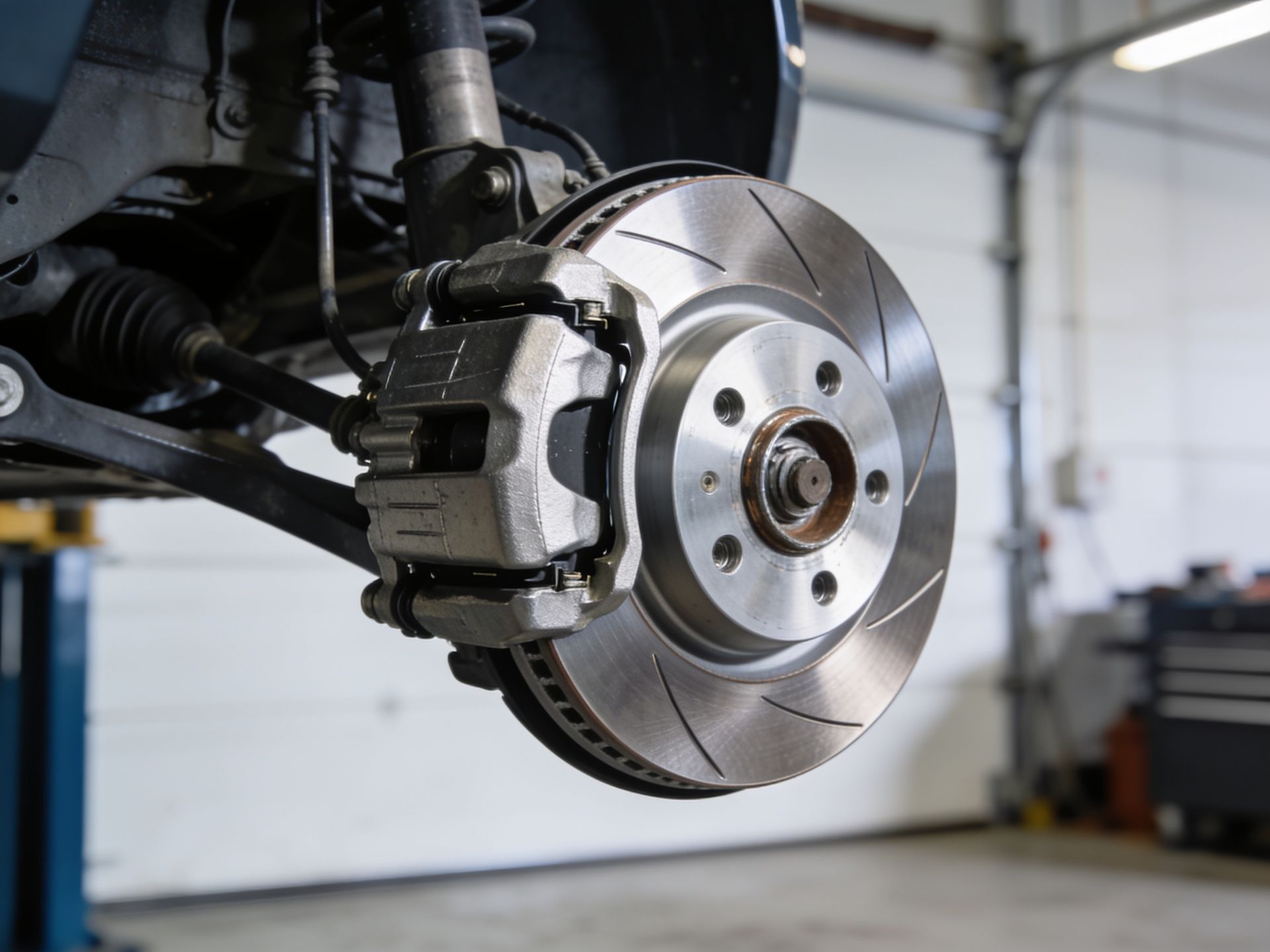
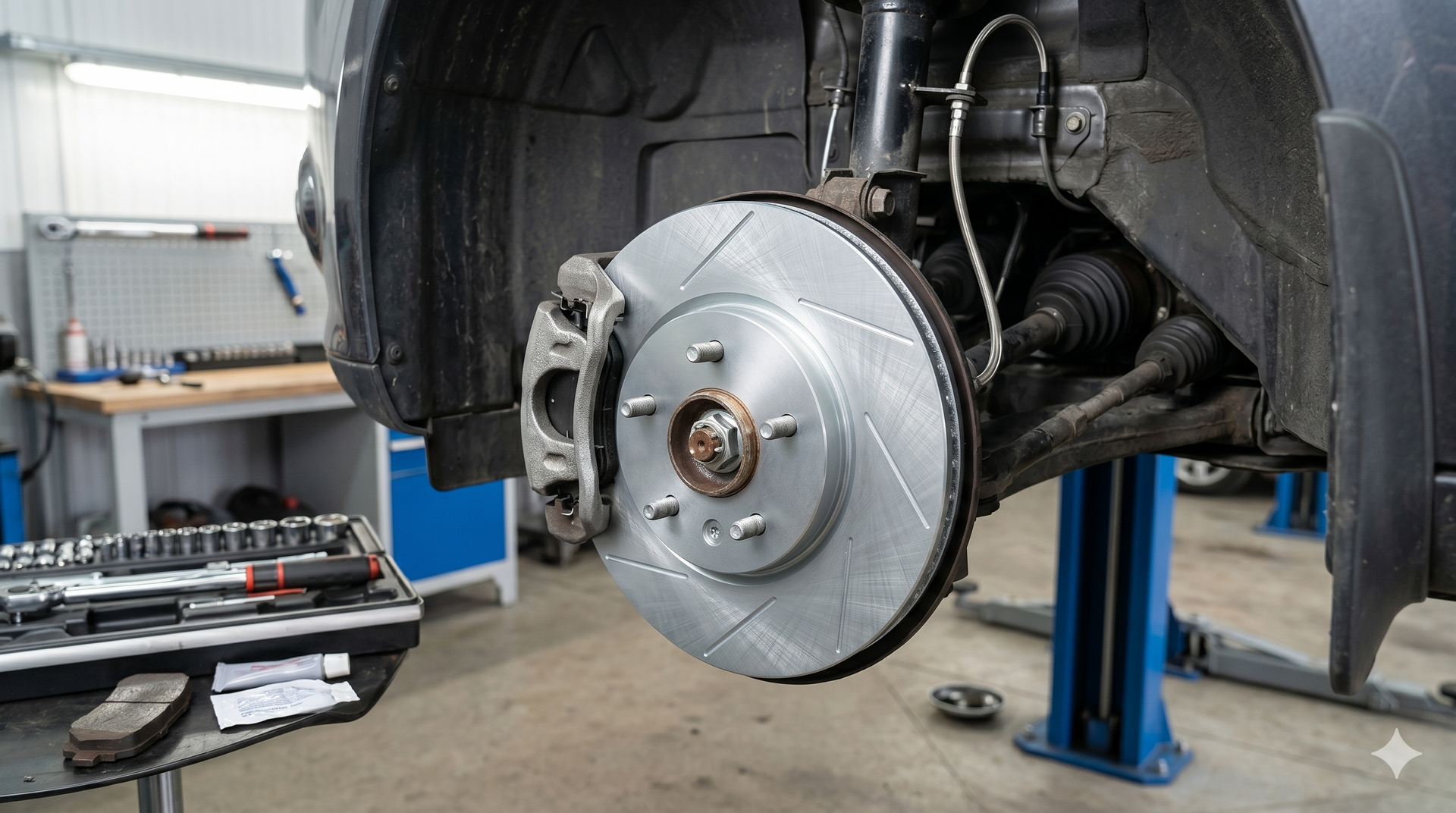
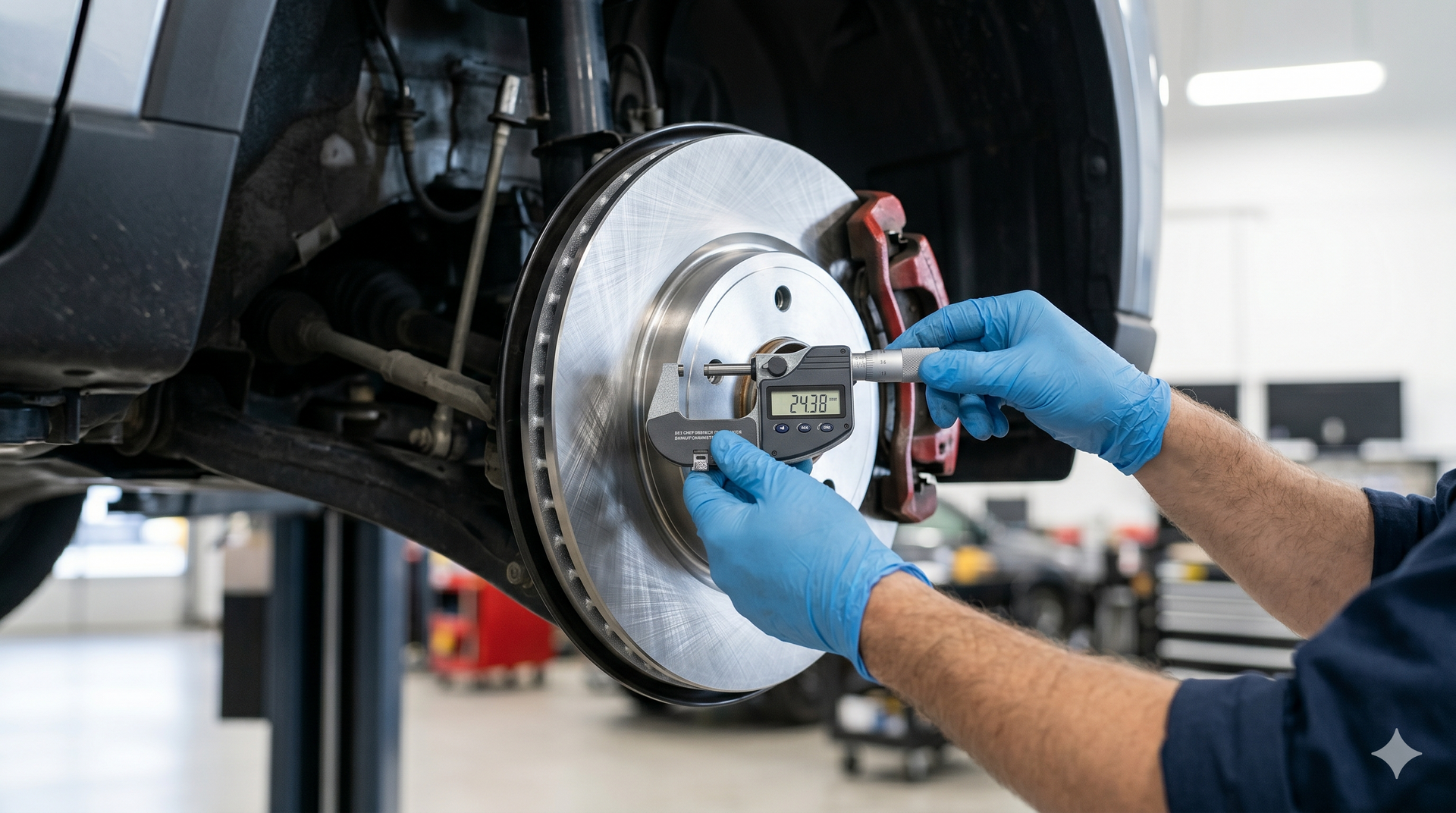
We safely lift the vehicle and remove the wheels. That allows our Master Certified technicians to inspect the entire brake system, not just what’s visible through the spokes.
Here’s what we physically examine:
- Brake pad thickness (measured precisely in millimeters)
- Rotor thickness and surface condition
- Rotor runout (to detect warping)
- Caliper function and slide movement
- Brake lines for cracks, leaks, or corrosion
- Brake hardware (clips, pins, springs)
- Brake fluid level and condition
A “courtesy check” often means a quick glance. A professional Ellisville brake inspection means measurements and diagnostics.
That difference protects you.
Step 3: Measuring Pad Thickness: Why It Matters
Brake pads don’t just “look fine” or “look worn.”
They’re measured.
New pads typically measure around 10-12mm. When pads reach 3mm or below, replacement is usually recommended. Around 4mm, we start having a conversation about timing.
Measuring tells us:
- How much usable life remains
- Whether wear is even on both sides
- If calipers are functioning properly
A quick visual check can’t reveal those details.
Step 4: Checking Rotor Condition and Runout
If you’ve ever felt the steering wheel shake when braking on I-64, rotor condition is often the cause.
We inspect rotors for:
- Scoring or grooves
- Heat spots
- Rust buildup
- Thickness below manufacturer spec
We also check rotor runout, a measurement that tells us whether the rotor is slightly warped.
Spring in Missouri generates heat. Hard braking in heavy traffic, combined with heat and humidity, can accelerate rotor wear. Winter temperature swings can also stress metal components.
These small measurements reveal big safety insights.
Step 5: Brake Fluid: The Overlooked Piece of the System
Brake fluid doesn’t get much attention, but it should.
Brake fluid absorbs moisture over time. In Missouri’s humid seasons, that process can happen faster than drivers realize.
Moisture lowers the fluid’s boiling point. Under hard braking, that can reduce performance.
During your St. Louis brake inspection, we:
- Check fluid level
- Inspect color and clarity
- Evaluate whether replacement is recommended
Brake fluid condition directly impacts stopping power.
Real-World Example: Catching Wear Before It Becomes a Problem
Last spring, a Wildwood customer came in before a road trip.
She hadn’t noticed noise or vibration. Everything “felt fine.”
During the inspection, we measured her rear brake pads at 2mm. She was surprised. There were no obvious symptoms, just time and mileage.
Replacing the pads before that road trip prevented rotor damage and gave her peace of mind heading out of town.
That’s the value of a thorough Ellisville brake inspection.
What Missouri Weather Does to Brakes
St. Louis weather creates its own set of challenges.
Spring heat can:
- Increase rotor temperatures
- Accelerate fluid degradation
- Stress caliper components
Cold winters can:
- Stiffen rubber brake lines
- Promote corrosion on hardware
- Affect slide pins and moving parts
Heavy rain season adds moisture exposure.
These aren’t theoretical issues. They’re things we see every year serving Ellisville, Ballwin, Manchester, and Chesterfield drivers.
The Difference Between a Real Inspection and a “Courtesy Check”
There’s a big difference between:
- A quick look with wheels on
- A full multi-point brake inspection
At Ellisville Tire & Service, we:
- Remove wheels
- Measure components
- Test moving parts
- Document findings clearly
A dealership may follow a corporate checklist. A chain store may follow sales targets.
We focus on accurate diagnostics and straight answers.
How We Explain What We Find
When the inspection is complete, we don’t hand you a printout filled with jargon.
We walk you through it.
Your results are categorized as:
Fix This Now
Safety-related concerns that should be addressed promptly.
Keep an Eye on It
Components that are wearing but not urgent yet.
You’re in Good Shape
Parts that are functioning properly.
You’ll see measurements. You’ll get clear explanations. You’ll receive transparent cost estimates before any work begins.
No inflated urgency. No pressure tactics.
Is It Worth Fixing on My Older Car?
This is one of the most common questions we hear in West County.
If your vehicle has higher mileage, you deserve an honest assessment.
We consider:
- Overall vehicle condition
- Cost of repair versus vehicle value
- Whether the issue is safety-critical
- How long you plan to keep the car
Sometimes a full brake repair makes perfect financial sense. Sometimes a more conservative approach is smarter.
Our job is to give you facts, not push a sale.
How Long Does a Brake Inspection Take?
Most inspections take about 45 minutes to an hour.
If additional diagnostics are needed, we explain that upfront.
We respect your time. Whether you’re squeezing in an appointment before work or between errands on Manchester Road, you’ll know what to expect.
Ellisville Tire & Service is open Monday through Saturday, making scheduling convenient for busy families and commuters.
Questions You Should Ask During Your Brake Review
When reviewing results, consider asking:
- How many millimeters are left on my pads?
- Are the rotors within spec?
- Is the wear even?
- Is brake fluid replacement recommended?
- What happens if I wait three months?
A knowledgeable technician should answer confidently and clearly.
Why a Local Shop Does This Differently
At a dealership, you often talk to a service advisor relaying information.
At a chain, you may get a scripted recommendation.
At Ellisville Tire & Service, you’re talking to real people who work on vehicles every day. Our Master Certified technicians understand St. Louis driving conditions and tailor recommendations accordingly.
That’s why so many drivers searching for an Ellisville brake inspection or West County brake check choose a trusted local shop.
When Should You Schedule a Brake Inspection?
Consider booking if:
- It’s been over a year since your last check
- You’re planning a road trip
- You’ve noticed noise, vibration, or a soft pedal
- You’re heading into storm season
- You just bought a used vehicle
Proactive inspections prevent expensive surprises.
Serving Ellisville and the Surrounding West County Area
We proudly serve drivers from:
- Ellisville
- Ballwin
- Wildwood
- Manchester
- Chesterfield
- Surrounding St. Louis metro communities
Whether you commute on I-64 daily or make short neighborhood trips, your braking system deserves professional evaluation.
Schedule Your Ellisville Brake Inspection Today
Before your next long drive.
Before storm season ramps up.
Before that faint noise turns into something bigger.
Schedule your Ellisville brake inspection at Ellisville Tire & Service today.
Our Master Certified technicians will measure, inspect, and explain everything in plain English. You’ll leave knowing exactly where you stand, and exactly what makes sense for your vehicle.
No corporate script.
No unnecessary repairs.
Just honest answers from your local West County brake specialists.