This is a subtitle for your new post
Your brakes still stop the car, but the pedal feels softer than it did last month.
That's worth paying attention to.
Changes in brake feel can be easy to second-guess. Maybe the pedal seems to travel a little farther. Maybe your usual stop takes more pressure than it used to. Maybe something simply feels different when you're slowing down on Manchester Road.
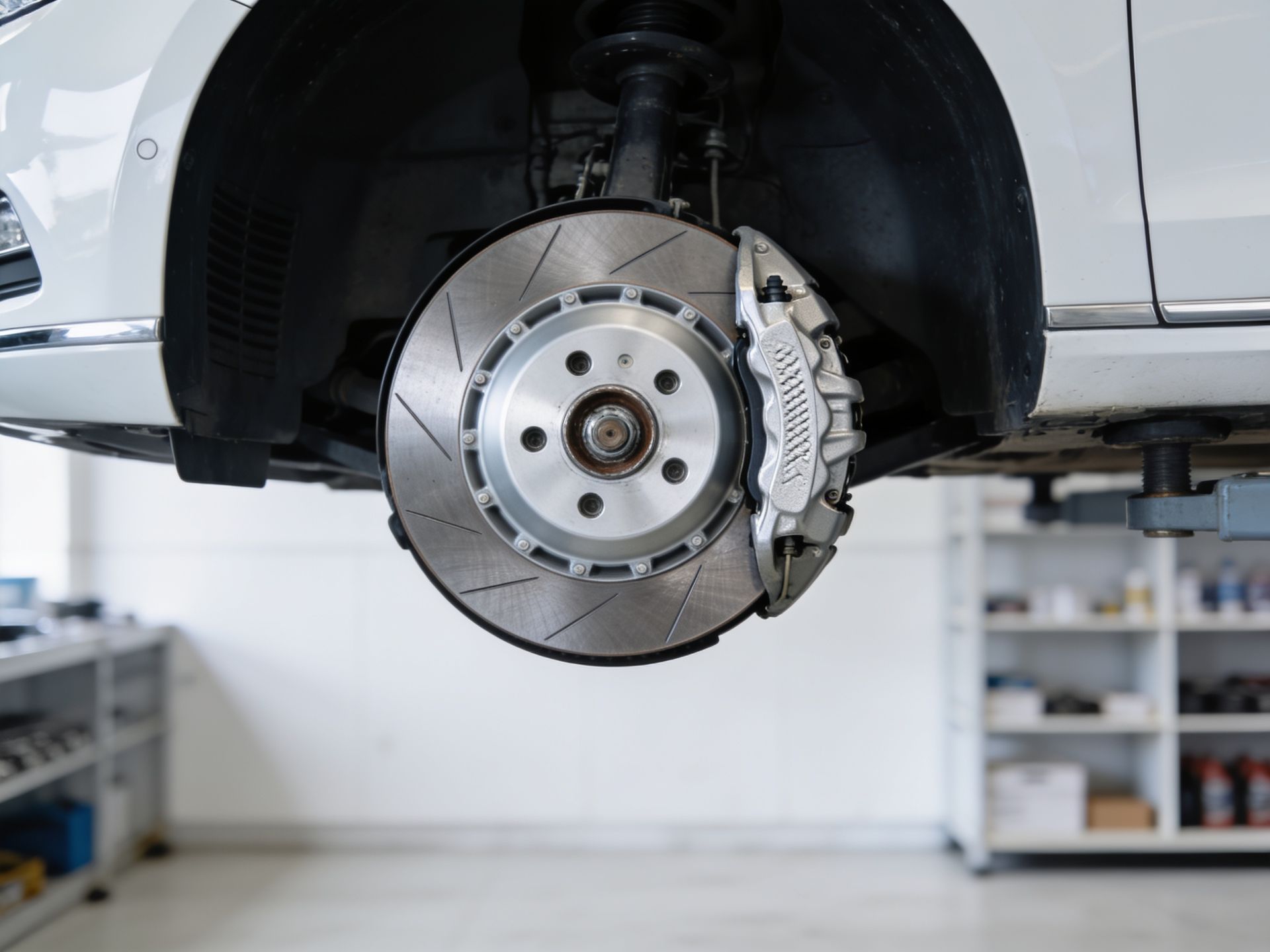
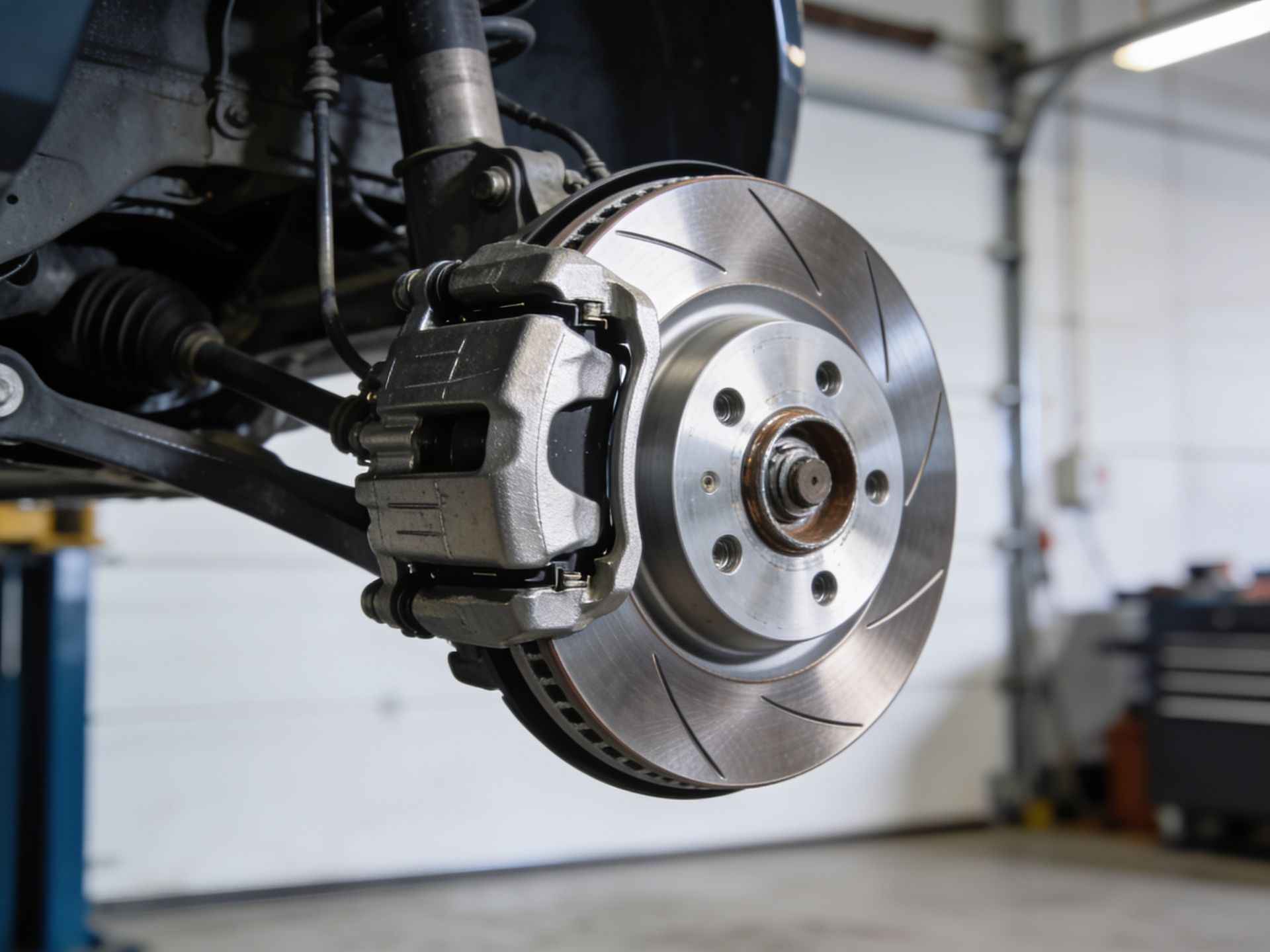
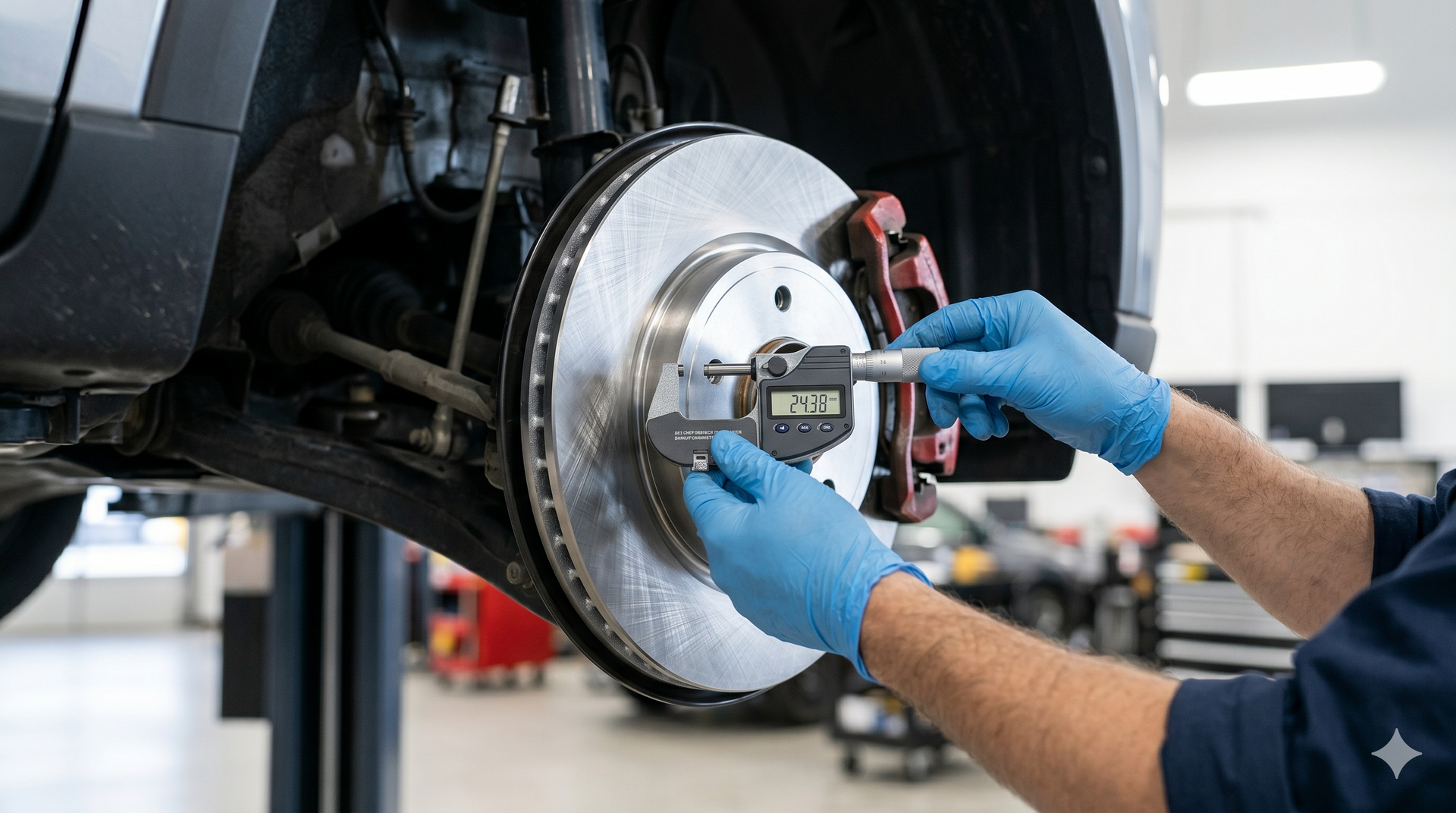
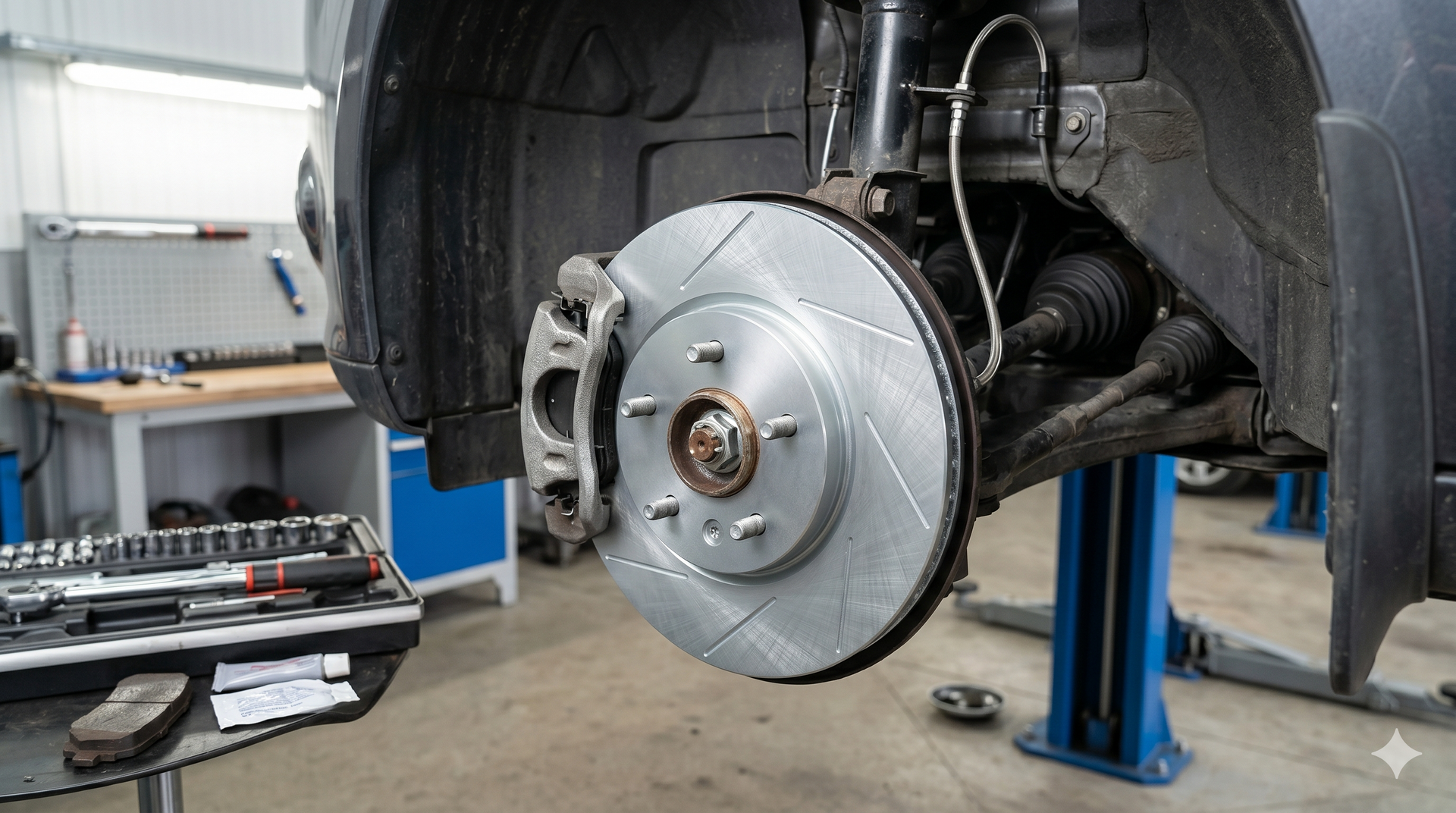
At Ellisville Tire & Service, our Master Certified technicians look at the entire braking system to figure out what changed before recommending a repair. We check the pads, rotors, calipers, and brake fluid, then explain what we find.
If you're dealing with a soft brake pedal in St. Louis, a spongy brake pedal in Ellisville, or brakes that simply feel different in West County, here's how to know when that change deserves attention.
Pay Attention to Feel, Not Just Noise
Most drivers know that squealing or grinding brakes can be a warning sign.
But your brake pedal can tell you just as much.
Changes in pedal feel may point to parts of the braking system you can't see or hear, including the hydraulic system and brake fluid.
Pay attention if:
- The pedal feels soft or spongy.
- The pedal travels farther than it used to.
- Your vehicle takes longer to stop.
- The pedal slowly sinks while you're holding steady pressure.
- You need more pedal pressure to make a normal stop.
Even if the brakes are still stopping the vehicle, a noticeable change from how they normally feel is worth investigating.
What Does a Spongy Brake Pedal Mean?
A healthy brake pedal should feel firm and predictable.
When the pedal feels soft or spongy, air or moisture in the braking system can sometimes be the reason.
Your brakes rely on hydraulic pressure. When you press the pedal, brake fluid transfers that force through the system so the brakes can slow the vehicle.
Air behaves differently from brake fluid because it can compress. If air gets into the lines, some of the force from your foot can go toward compressing that air instead of immediately applying the brakes.
The result can be a pedal that feels softer or less responsive than you're used to.
That's one reason a spongy brake pedal in Ellisville deserves an inspection instead of a guess.
Brake Fluid Changes Over Time
Brake fluid probably isn't something you think about during your morning commute.
But it plays a major role every time you stop.
Over time, brake fluid can absorb moisture. As the moisture content increases, the fluid's boiling point can decrease and its performance can change.
That matters because braking generates heat. Frequent stopping on Manchester or Clarkson Road can ask the braking system to work repeatedly, especially during busy school-run and commuter hours.
Old or moisture-contaminated fluid may contribute to a softer or less consistent pedal feel.
Depending on what an inspection finds, brake fluid service may be part of the solution. But fluid isn't the only possible cause, which is why diagnosis comes first.
Why Fall Can Make Brake Changes More Noticeable
Fall brings a return to busy routines across West County.
School drop-offs are back. Commutes get busier. Afternoons fill with pickups, errands, practices, and activities.
That means more frequent stops.
We see soft pedals climb in fall as folks get back into heavy stop-and-go driving. Often, the cause involves fluid or pad wear, and it's better caught early.
If you've noticed your brakes feeling different while navigating the lights and school zones along Manchester or Clarkson Road, don't dismiss the change just because the car still stops.
Longer Stops Can Have More Than One Cause
A brake pedal that feels different isn't always caused by brake fluid.
If your vehicle seems to take longer to stop than it used to, several parts of the braking system could be involved.
Possible causes can include:
- Worn brake pads
- Glazed or uneven rotors
- Brake fluid problems
- Caliper issues
- Other hydraulic system concerns
Different problems can create similar symptoms from the driver's seat.
That's why guessing at the cause based on feel alone can be risky. The correct repair depends on what's actually happening inside the braking system.
At Ellisville Tire & Service, we'll find what changed and tell you straight.
A Sinking Brake Pedal Needs Attention Now
Some brake changes are more urgent than others.
A pedal that slowly sinks toward the floor while you're holding steady pressure is one of the signs you shouldn't ignore.
Your braking system depends on maintaining hydraulic pressure. If the pedal can't maintain its position, there could be a problem within that system that affects your ability to brake normally.
If the pedal sinks significantly, braking performance changes suddenly, or you aren't confident the vehicle will stop safely, don't keep driving to see if it improves.
Pull over somewhere safe and call for help.
A Simple Brake Feel Check You Can Do While Parked
If something feels different but you're having trouble describing it, you can do a simple check before coming in.
Start with the vehicle parked safely.
Press the brake pedal with steady pressure and pay attention to how it feels. It should feel firm and hold relatively steady rather than continuing to sink toward the floor.
Then think about what has changed from normal.
Does the pedal travel farther?
Does it feel softer?
Does it require more pressure?
If the pedal feels stable and you're comfortable doing so, you can also pay attention during a few gentle stops on a quiet, low-speed street. Notice whether the vehicle stops smoothly and predictably.
This isn't a replacement for a brake inspection. It's simply a way to identify whether something has changed so you can describe it when you bring the vehicle in.
Don't Try to Diagnose Brake Feel From the Driver's Seat
"Soft brakes" describes a symptom, not a repair.
The cause could involve the pads, rotors, calipers, brake fluid, or another part of the hydraulic system.
Replacing parts based on a guess can mean spending money without fixing what actually caused the change.
That's why our approach starts with diagnosis.
Our Master Certified technicians inspect the braking system, identify what is causing the change in feel, and explain what needs attention. If something doesn't need to be replaced, we're not going to tell you that it does.
When Should You Schedule Soon?
A small but noticeable change in brake feel deserves attention, even when the vehicle still seems to stop normally.
Schedule a brake inspection soon if:
- The pedal feels slightly softer than usual.
- You need more pressure for normal stops.
- Stopping distances seem a little longer.
- The pedal travels farther than it used to.
- The change has developed gradually.
- You aren't sure when your brake fluid was last serviced.
These are good reasons to have the system checked before the change becomes more significant.
When Should You Stop Driving?
Some symptoms call for a faster response.
Stop driving and call for help if:
- The brake pedal sinks significantly toward the floor.
- You suddenly lose substantial braking power.
- The vehicle isn't stopping predictably.
- The pedal becomes dramatically softer without warning.
- You don't feel confident you can stop the vehicle safely.
When it comes to brakes, uncertainty about whether the vehicle can stop safely is reason enough not to keep driving.
Get an Honest Answer About What Changed
If your brakes felt normal a month ago and don't today, you don't have to figure out why on your own.
Bring the vehicle to Ellisville Tire & Service.
Our Master Certified technicians will check the pads, rotors, calipers, and brake fluid to identify what's behind the change. Then we'll explain what we found, what needs attention, and what your options are.
No guessing. No unnecessary repairs. Just straight talk and honest pricing from a local West County shop.
Ellisville Tire & Service serves drivers from Ellisville, Ballwin, Wildwood, Manchester, Chesterfield, and surrounding West County communities from our Ellisville, Missouri location, with convenient Monday through Saturday hours.
If your brakes feel different in West County, your pedal has started feeling soft, or you simply aren't sure whether a change is normal, book a brake inspection or call our Ellisville shop.
We'll find what changed and tell you straight.