So how often should you replace your brakes, and how do you know when it’s time?
If you commute on I-64, sit in Manchester Road traffic, or make daily school runs through Ballwin and Wildwood, your brakes are working harder than you probably realize.
Missouri weather doesn’t go easy on them either. Cold winter mornings. Hot, humid summers. Heavy rain during storm season. All of it affects how long your brakes last.
So how often should you replace your brakes, and how do you know when it’s time?
Here’s what St. Louis metro drivers need to understand.
How Long Do Brake Pads and Rotors Usually Last?
There’s no single mileage number that applies to everyone.
In general:
- Brake pads last between 30,000 and 70,000 miles
- Rotors often last 50,000 to 70,000 miles or longer
- City driving shortens pad life
- Highway commuting can extend pad life but stress rotors
A Wildwood driver doing short trips every day will wear pads differently than a Chesterfield commuter driving steady highway miles.
That’s why a proper Ellisville brake repair inspection matters more than relying on a generic mileage chart.
How Missouri Weather Affects Brake Wear
St. Louis weather cycles create their own brake challenges.
Winter
Cold temperatures can stiffen components and promote corrosion. Even though we don’t see the same salt exposure as northern states, moisture and temperature swings still impact brake hardware.
We often see:
- Surface rust on rotors
- Sticking caliper slide pins
- Hardware beginning to corrode
Spring Storm Season
During storm season, heavy rain increases moisture exposure. That can accelerate rust formation on brake components.
We regularly see hardware rust up faster than drivers expect after a wet spring.
Summer Heat and Humidity
Hot pavement and humid air affect brake systems more than people realize.
Heat builds up in rotors during repeated stops in traffic. Humidity contributes to brake fluid absorbing moisture over time. That reduces its boiling point and can impact performance under stress.
Weather matters, and West County drivers feel it year-round.
The Most Common Warning Signs It’s Time for Brake Service
Brakes almost always give you signals.
If you notice any of the following, it’s time to schedule a St. Louis brake service appointment:
- Squealing or squeaking
- Grinding noise
- Steering wheel vibration when braking
- Vehicle pulling to one side
- Soft or spongy brake pedal
- Brake warning light illuminated
Some signs allow short-term monitoring. Others require immediate attention.
A professional inspection tells the difference.
“It Only Does It When It’s Wet” Should You Worry?
This is a common comment we hear in Ellisville.
Sometimes brakes squeal briefly when wet. Light surface rust forms overnight and clears off once you drive.
But persistent squealing, especially if it happens in dry conditions, can indicate:
- Brake pads nearing the wear indicator
- Glazed pad material
- Uneven wear
- Hardware issues
If the noise keeps returning, it’s not something to ignore.
Grinding, on the other hand, usually means the pad material is gone. That’s when metal contacts metal, and repair costs increase quickly.
Brake Pad Thickness: How Much Is Still Safe?
Brake pads are measured in millimeters.
- New pads: about 10-12mm
- 4mm: time to monitor closely
- 3mm or less: replacement recommended
A quick driveway tip is the “quarter test.” If you can see the outer pad through your wheel and it looks thinner than a quarter’s edge, it may be time for inspection.
That said, visual checks aren’t precise. A professional Ellisville brake inspection provides exact measurements.
Guessing isn’t worth it.
What a Pulsing Brake Pedal Is Telling You
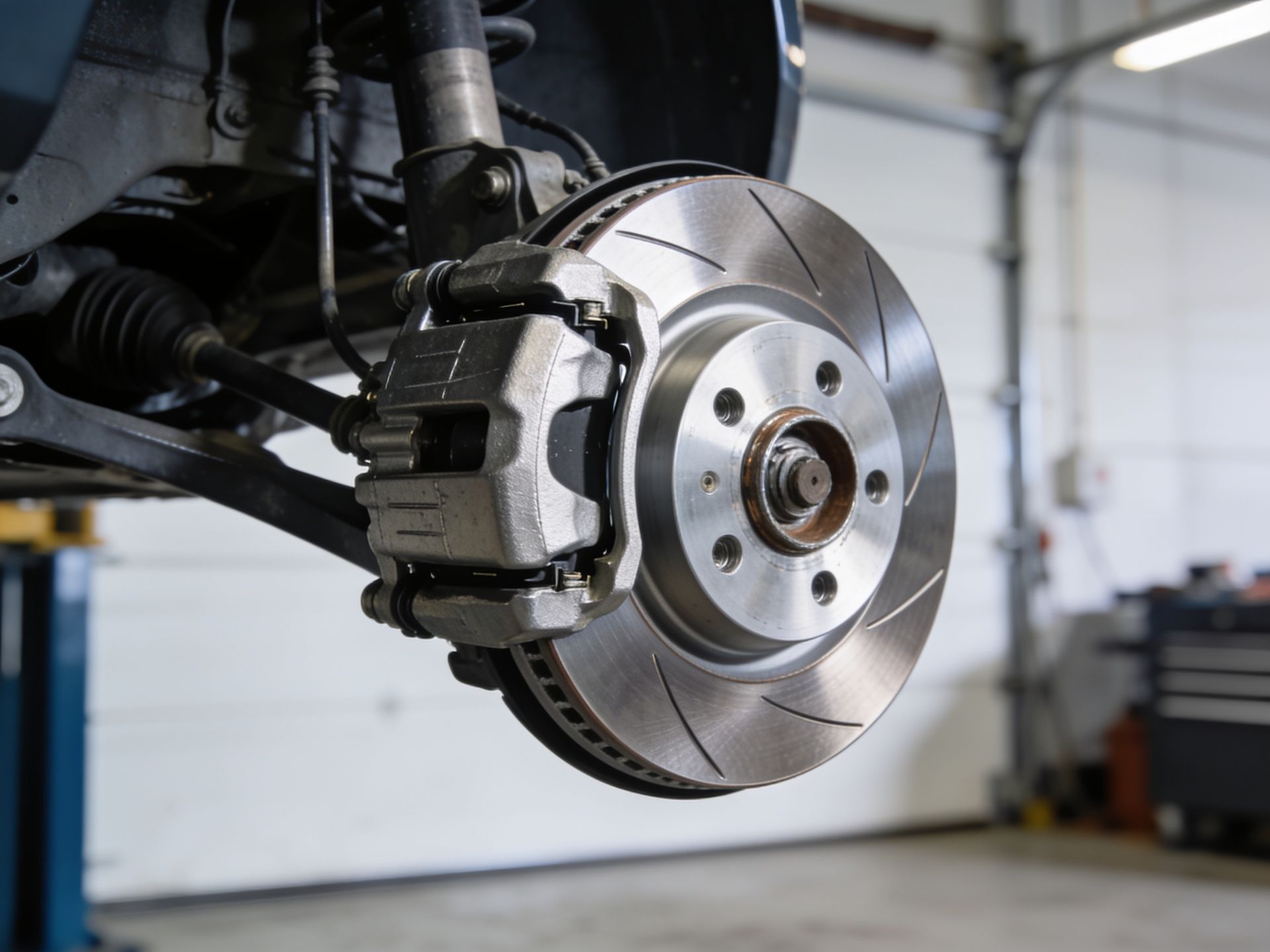
If you feel a pulsing sensation when slowing down on I-64, warped rotors are often the cause.
Rotors can warp due to:
- Repeated hard braking
- Heat buildup in traffic
- Uneven pad deposits
- Improper torque during installation
That vibration may start subtle. It rarely fixes itself.
Addressing it early can prevent further wear.
Catching Brake Wear Early vs. Waiting
Here’s the honest cost difference.
If you replace brake pads early, you’re typically looking at a moderate repair cost per axle.
If you wait until pads grind into rotors, you’ll likely need:
- Pads
- Rotors
- Possibly additional hardware
That can significantly increase the bill.
Delaying service doesn’t just affect cost. It can reduce stopping performance, something no West County driver wants during heavy traffic or sudden stops.
What a Professional Brake Inspection Includes
If you’re unsure whether your brakes need service, start with an inspection.
At Ellisville Tire & Service, our Master Certified technician’s check:
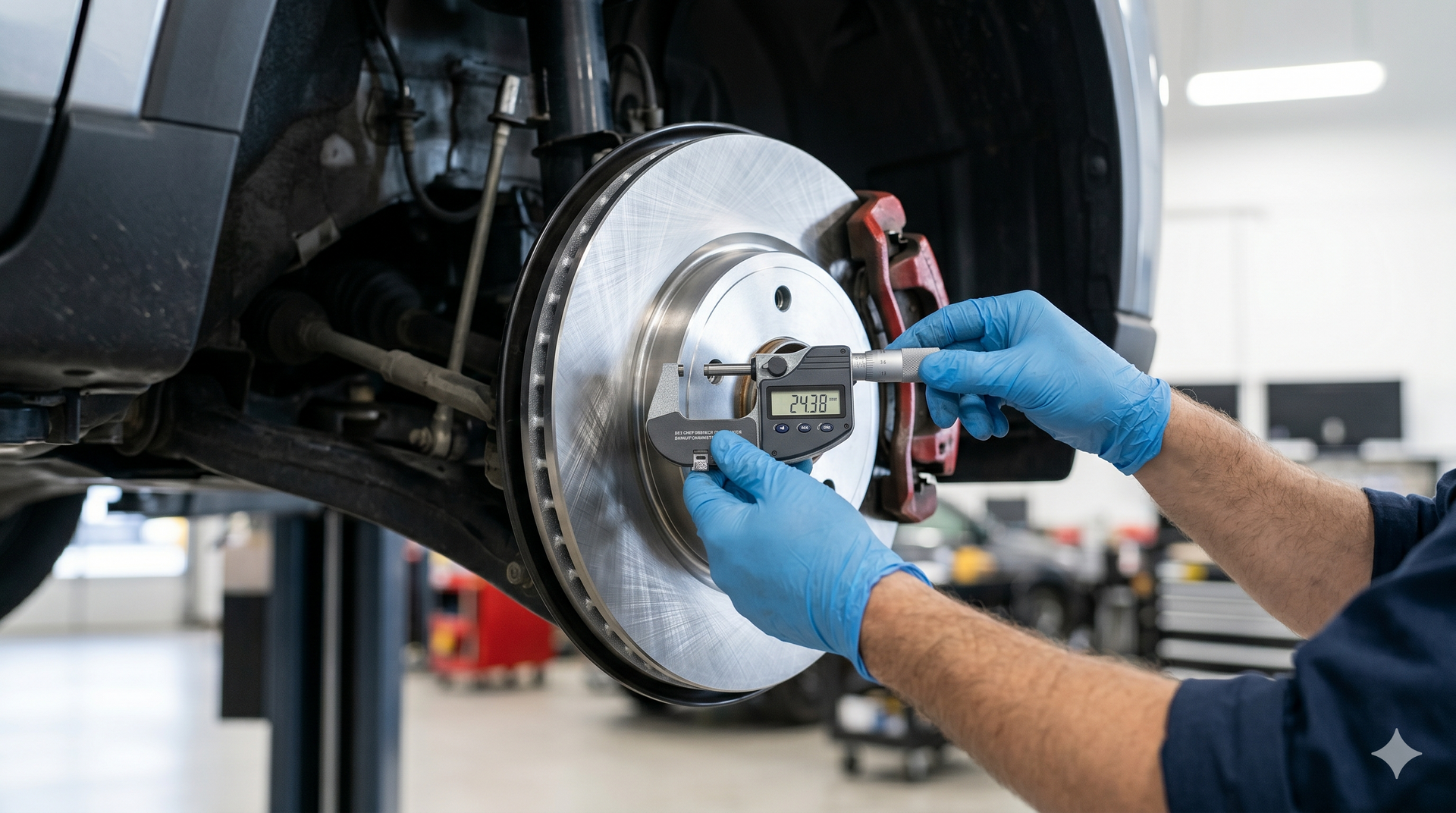
- Brake pad thickness
- Rotor thickness and surface condition
- Rotor runout
- Caliper operation
- Brake lines
- Brake hardware
- Brake fluid level and condition
We measure. We don’t estimate.
Then we categorize findings clearly:
- Fix now
- Safe to monitor
- In good shape
That gives you a clear plan.
When Brake Repairs Make Financial Sense on Older Vehicles
If your vehicle has higher mileage, you may wonder whether repairs are worth it.
This isn’t a one-size-fits-all answer.
We look at:
- Overall vehicle condition
- Remaining lifespan expectations
- Total repair cost relative to value
- Safety considerations
Brakes are a safety system. Even on older vehicles, maintaining stopping ability is essential.
Sometimes a full repair makes sense. Sometimes a targeted approach is more practical.
You’ll get an honest answer, not a sales pitch.
City Driving vs. Highway Driving in West County
Where you drive matters.
Manchester Road traffic:
- Frequent stops
- Higher pad wear
I-64 commuters:
- Fewer stops
- Higher-speed braking
- Increased rotor stress
Suburban neighborhood driving:
- Short trips
- Brakes rarely fully heat up
- Potential for moisture-related corrosion
Your daily routine influences service timing more than you might think.
Seasonal Brake Tips for St. Louis Drivers
Before Winter
- Make sure pads have adequate thickness
- Inspect hardware for early corrosion
- Check brake fluid condition
Cold weather can amplify existing issues.
Before Spring
- Listen for new noises
- Watch for vibration
- Schedule a post-season inspection
Moisture exposure during colder months can show up later.
During Summer
- Pay attention to brake feel in heavy traffic
- Consider brake fluid condition if it hasn’t been serviced in years
Hot, humid days stress brake systems more than mild ones.
Why West County Drivers Choose Ellisville Tire & Service
When searching for Ellisville brake repair or St. Louis brake service, many drivers want straight talk.
At Ellisville Tire & Service:
- You speak with real people, not scripted advisors
- Our technicians are Master Certified
- We explain everything clearly
- We provide transparent pricing
- We’re open Monday through Saturday
- We serve Ellisville, Ballwin, Wildwood, Manchester, Chesterfield, and surrounding communities
We’ve built a reputation in West County for fair recommendations and relationship-based service.
Families come back because they trust what we tell them.
Not Sure If It’s Time? Let’s Take a Look.
If you’ve noticed squealing, vibration, or a soft pedal, don’t wait.
If it’s been more than a year since your last brake check, it’s worth scheduling one.
If you’re heading into a busy season of commuting or planning a road trip, peace of mind matters.
Schedule your Ellisville brake inspection today at Ellisville Tire & Service.
Our Master Certified technicians will inspect, measure, and walk you through the results in plain English. You’ll know what needs attention now, what can wait, and what’s perfectly fine.
Real answers.
Fair pricing.
No pressure.
Book your West County brake service appointment today and drive with confidence.